
Safety
People need enough psychological and relational safety to participate honestly without humiliation or unnecessary exposure.
Mental wellbeing and social impact in Kenya
Mental wellbeing and social impact in Kenya
Nyumba Yetu is an emerging Kenyan mental-wellbeing and social-impact organisation founded by Francis Muya.
We work with young people, families, educational institutions and communities to help hidden emotional, behavioural and social struggles become visible earlier—when trust, timely human support, responsible follow-up and appropriate referral can still make a meaningful difference.
Our approach is being developed through practical fieldwork and an institutional pilot at Ndumberi Vocational Training Centre in Kiambu County.
The meaning behind our identity
Despite its name, Nyumba Yetu is not a housing organisation. “Our Home” describes the human conditions we seek to strengthen: safety, belonging, compassion, responsibility, meaning and access to appropriate support.
People need enough psychological and relational safety to participate honestly without humiliation or unnecessary exposure.
Connection reduces isolation and helps people recognise that struggle does not remove their dignity or place in community.
Behaviour is approached with curiosity and human understanding—not immediate judgement, shame or labelling.
Compassion does not remove agency. People are supported to recognise patterns, make choices and practise healthier responses.
Difficulty can be understood within a larger life story without being allowed to define a person’s whole identity.
When needs exceed our role, the responsible next step is connection to suitably qualified or emergency support.
“A home is not merely where people live. It is where they are seen, supported and reminded of who they can become.”
The problem we are addressing
Behaviour may be visible while the pressure, fear, isolation, grief, family difficulty or loss of direction beneath it remains hidden.
The problem is not always a lack of care. It is often the absence of trusted, consistent systems that help people notice concerns, respond proportionately and follow through.
Read why students may struggle in silenceWithdrawal, conflict, absence, falling performance, substance use or sudden changes may be noticed first.
The emotional, relational and environmental context can remain misunderstood or entirely undisclosed.
Concern may be discussed, but responsibility, documentation, support and follow-up can remain unclear.
Without a trusted pathway, an emerging concern may intensify before appropriate support is reached.
Our operating question: What must an institution consistently do to recognise hidden struggles earlier and respond responsibly—without depending on one exceptional individual to carry the whole system?
This preventative direction is consistent with the World Health Organization’s emphasis on mental-health promotion and prevention across healthcare, education and other sectors.
WHO: Mental-health promotion and preventionThe direction behind our work
Three levels of clarity keep Nyumba Yetu focused on the human outcome, the work required and the future we are trying to make possible.
Why we exist
To create conditions in which hidden struggles can be recognised earlier, meaningful support can be reached and recovery becomes more possible.
What we do
To work with people, families, institutions and communities to build trust-based pathways for reflection, behavioural understanding, timely support, follow-up and responsible referral.
The future we seek
A world in which people facing emotional, behavioural, relational or addiction-related struggles are noticed before crisis defines them and supported to rebuild lives of belonging, responsibility and purpose.
From concern to coordinated action
Nyumba Yetu helps institutions and communities create practical pathways through which concerns can be recognised, understood and connected to an appropriate human response.
Use shared experiences and respectful engagement to create safer conditions for participation.
Help people notice thoughts, feelings, pressures, habits, choices and support needs.
Turn appropriate, consent-based information into a clearer view of emerging patterns and concerns.
Clarify who should respond, what follow-up is needed and when referral or escalation is appropriate.
Reinforce responsibility, supportive relationships, healthier routines and purposeful participation.
Information is not the outcome. It becomes useful only when it supports an ethical, proportionate and accountable human response.
Explore Student WellbeingThe Nyumba Yetu methodology
Sustainable change rarely begins with instruction. It begins when a person feels safe enough to participate, aware enough to recognise what is happening and supported enough to practise a different response.
Create conditions in which people can participate, connect and speak more honestly. Trust is not preparation for the work; it is the first part of the work.
Recognise thoughts, emotions, pressures, habits and choices without immediately collapsing into shame or defensiveness.
Examine experience from a more constructive and responsible perspective. A struggle can be part of the story without becoming the whole identity.
Translate insight into small, repeated actions that strengthen healthier responses. Change becomes believable when it is practised.
Use relationships, accountability and supportive environments to reinforce the healthier identity and choices being developed.
Notice. Reset. Realign. Move.
Our design principles
Nyumba Yetu does not treat human difficulty merely as behaviour to suppress, a score to manage or a crisis to contain. We consider the person, their environment and the system responsible for responding.
We seek the human story beneath visible behaviour without excusing harm or removing responsibility.
We do not demand vulnerability from people before creating credible reasons for them to feel safe.
Information must lead to a defined, proportionate response—not passive monitoring or institutional surveillance.
People deserve understanding and remain capable of agency, accountability and purposeful change.
We examine whether everyday routines can recognise concern and coordinate support before escalation.
We define what belongs within our non-clinical role and when qualified or emergency support is required.
Implementation before claims
Nyumba Yetu is testing its early-support approach through practical institutional and community work. We implement carefully, observe honestly and improve what field experience reveals.
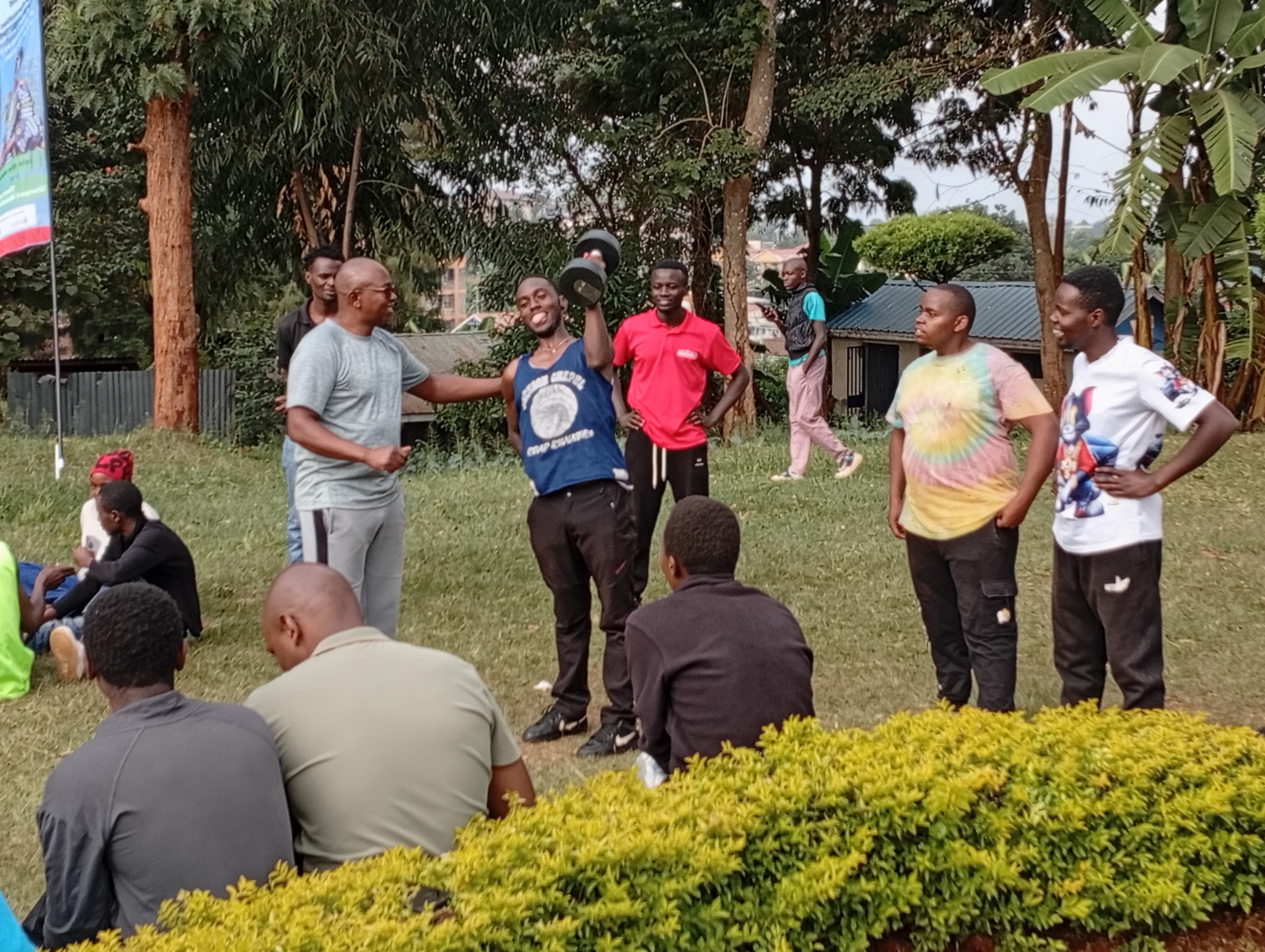
Current implementation setting
At Ndumberi VTC, Nyumba Yetu is developing a practical sequence for trust-building, structured reflection, behavioural visibility, human support and responsible escalation.
Our work sits within Kenya’s wider mental-health direction while remaining appropriately limited to our developing non-clinical role. National policy and adolescent evidence provide context; local relationships and implementation provide the operational learning.
12 June 2026 · Ndumberi VTC
An early trust-building experience using sport, shared activity and informal participation.
Read the field report10 July 2026 · Ndumberi VTC
A second implementation event exploring voluntary participation, connection and institutional openness.
Read the field reportFounder and systems-builder
Francis Muya leads the development of Nyumba Yetu as a Kenyan founder, strategist and field practitioner. His role spans organisational direction, methodology development, institutional relationships, field implementation and the disciplined translation of learning into a more reliable system.
Partnership as shared responsibility
No single organisation can create the conditions for wellbeing, early support and sustainable recovery alone. We seek relationships where roles, contribution and accountability are clear.
Student trust, reflection, staff response, follow-up and referral pathways.
Family resilience, participation, recovery support and social reinforcement.
Clinical guidance, safeguarding, referral, escalation and recovery coordination.
Public-service coordination, standards, accountability and responsible scale.
Research quality, independent evaluation, evidence generation and knowledge sharing.
Programme sustainability, equitable access, environmental wellbeing and enabling infrastructure.
Alignment before activity. A conversation begins the assessment; it does not automatically establish a partnership.
Explore Institutional PartnershipClear roles, ethical boundaries and human dignity
Early support must be compassionate, responsible and clear about its limits. Some situations require qualified clinical, safeguarding, emergency or statutory intervention beyond Nyumba Yetu’s role.
Within our role
Outside our role
Do not wait for an ordinary programme pathway where someone may be at immediate risk. Contact local emergency services or an appropriately qualified professional.
Relationships currently supporting the work
Each relationship is described according to what currently exists. We do not imply endorsement, funding or formal partnership beyond the known scope.
Implementation setting · Kiambu County
Providing the institutional setting in which community engagement, participant reflection, behavioural visibility and support workflows are being developed and tested.
Practical collaborator · Kenya
Supporting community-day logistics, transport, environmental wellbeing activities and nature-based participation.
The next responsible step
Whether you represent an educational institution, community organisation, professional network, research body, government agency or funding partner, begin with the real problem your people are facing—not with a predetermined programme.
What human struggle is your institution currently seeing too late—and what would need to change for support to begin earlier?