Chang’aa, a traditional home-brewed spirit made from grains, sugar, and water, is widely consumed in Kenya—especially in informal settlements and rural areas. Known for its high alcohol content and affordability, it is often seen as a quick escape from life’s hardships. But behind every cheap bottle of Chang’aa lies a hidden cost—one that touches health, families, and entire communities.
The True Price of Cheap Alcohol like Chang’aa
A cup of Chang’aa might sell for as little as KSh 20, making it far more accessible than regulated alcohol. But this affordability comes at a price:
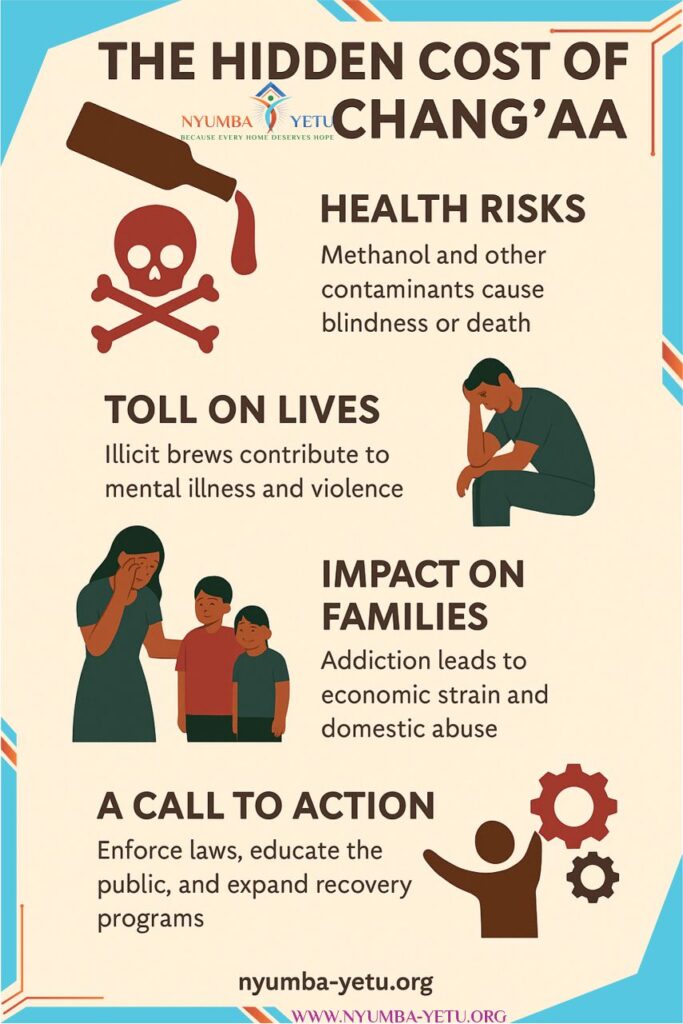
- Health risks: Many brewers mix in harmful additives like methanol, battery acid, or formalin to increase potency. These substances can cause blindness, organ failure, or even death (BBC News).
- Unregulated environments: It’s often brewed in unhygienic, unsafe conditions, leading to contamination and diseases such as typhoid and cholera.
The Toll on Health and Lives
According to the National Authority for the Campaign Against Alcohol and Drug Abuse (NACADA), up to 13% of Kenyans consume illicit brews, with the majority being low-income earners. These brews contribute significantly to:
- Mental health issues like anxiety, depression, and psychosis
- Increased risk of gender-based violence and sexual assault
- Liver disease, ulcers, and malnutrition
Several high-profile tragedies—like the deaths of over 20 people in Nakuru in 2021 due to methanol-laced brews—highlight just how fatal unregulated alcohol can be.
Impact on Families and Communities
The damage doesn’t stop at the individual. The ripple effects of Chang’aa addiction devastate entire families:
- Children drop out of school when parents spend money on alcohol instead of education.
- Domestic violence and neglect rise in households affected by heavy drinking.
- Communities lose productivity as men and women who should be working are trapped in cycles of drinking and recovery.
In rural areas like Kisii, Bungoma, and parts of Central Kenya, entire economies suffer as the youth opt for brewing or drinking Chang’aa instead of pursuing sustainable livelihoods.
Why People Turn to Chang’aa
Many Kenyans who drink Chang’aa are not simply “addicts”—they are people trying to cope with poverty, trauma, and hopelessness. With limited access to mental health services or job opportunities, the bottle becomes a temporary refuge.
Cultural normalization and the stigma surrounding recovery also prevent many from seeking help. In some communities, drinking is so normalized that those who try to stop are seen as outsiders.
What Can Be Done? A Call to Action
Solving the Chang’aa crisis in Kenya requires a multi-pronged approach:
- Stronger enforcement against illegal brews while offering alternatives to brewers
- Public education on the health dangers of Chang’aa
- Community-based recovery programs, like those run by Nyumba Yetu, that offer holistic support for those struggling with addiction
- Promotion of sports and community activities to offer alternative forms of coping and connection
Breaking the Cycle
Chang’aa may offer a cheap escape, but its cost is paid in lives, health, and lost futures. We must not only fight the supply but also heal the demand—by addressing trauma, poverty, and mental health at the root.
If you or someone you know is struggling with alcohol addiction, visit www.nyumba-yetu.org for support and resources. There is hope. Recovery is possible.